


Steri-Strips: Uses, Care, Removal and Warning Signs
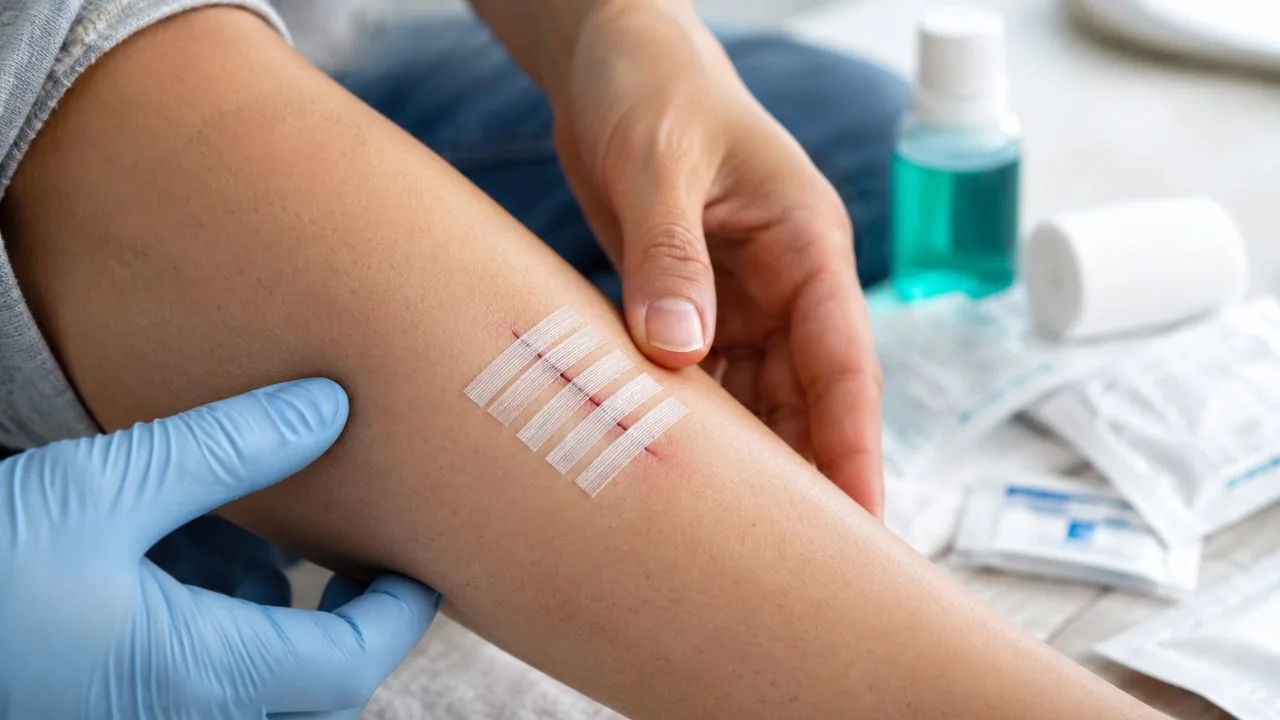
Steri-Strips are thin adhesive wound-closure strips used to hold the edges of certain cuts or surgical incisions together. They may be applied by a healthcare professional after a procedure or used for a suitable minor wound when the edges come together easily. Unlike an ordinary plaster, they cross the cut and provide support while the skin begins healing.
These strips can be a convenient, needle-free option for selected superficial wounds with little tension. They are also commonly placed over an incision, used with stitches or staples, or applied after those closures are removed. However, they cannot replace medical treatment for every cut, particularly when a wound is deep, contaminated, heavily bleeding or difficult to close.
Correct care matters because pulling the strips, soaking the area or applying them to unsuitable wounds may cause the edges to separate. Infection, skin irritation and delayed healing can also occur. Following the instructions from the clinician who treated the wound should always take priority over general wound-care advice found online.
Most Steri-Strips loosen and fall away naturally as healing progresses, although the timing varies by wound and procedure. Contact a healthcare professional if the wound reopens, becomes increasingly painful or develops warmth, swelling, discharge or a bad smell. Small adhesive strips are useful, but they should never hide symptoms that require medical assessment.
What Are Steri-Strips?
Steri-Strips is a well-known brand name for adhesive skin closures. People also call these products wound-closure strips, butterfly bandages, skin tapes or surgical closure strips. They are usually made from a breathable material with an adhesive backing that attaches to the healthy skin on both sides of a cut.
The strips work differently from a conventional adhesive bandage. A normal plaster usually covers and protects a wound with a central pad, while a closure strip pulls the two skin edges toward each other. This support can help a suitable superficial cut remain closed during the early stages of healing.
Several sizes and designs are available, including narrow strips for small cuts and reinforced products intended to provide greater support. Some healthcare professionals also place longer strips parallel to the wound after applying the main closures. These additional pieces may help secure the ends and reduce premature lifting.
Steri-Strips are medical devices rather than decorative tape. They should be stored properly, used before their expiry date and applied only once. Manufacturer instructions state that the strips can secure, close and support small cuts and wounds, including after stitches or staples have been removed under professional direction.
How Do Steri-Strips Help a Wound Heal?
A cut creates a gap between two sections of skin. When the injury is shallow and the edges can be brought together gently, Steri-Strips hold those edges in closer alignment. This allows the body’s natural healing process to rebuild and strengthen the damaged area without the wound repeatedly pulling apart.
The adhesive attaches to the dry skin beside the wound rather than filling the cut itself. Each strip is placed across the wound so it supports both sides. Several strips may be positioned with small spaces between them, allowing drainage to remain visible instead of sealing the entire area under one continuous piece of tape.
Keeping the edges together may protect the fragile new tissue from ordinary movement and tension. However, the strips do not create the deeper strength provided by internal or external sutures. If a wound has damaged deeper layers, closure strips on the surface cannot repair muscles, tendons, nerves or tissue beneath the skin.
Healing still depends on factors such as wound depth, contamination, blood supply and movement. Steri-Strips provide temporary mechanical support, but they do not disinfect the wound or treat an infection. A healthcare professional should assess any injury that does not fit the characteristics of a simple, superficial cut.
When Are Steri-Strips Commonly Used?
Healthcare professionals may use Steri-Strips to close selected minor lacerations with straight, clean edges. They work best when the skin can be brought together without force and the surrounding area is dry enough for secure adhesion. Small cuts in relatively low-movement areas are generally more suitable than wounds exposed to repeated stretching.
Steri-Strips are also widely used during surgical incision care. A clinician may apply them as the main external closure for a small incision or place them over dissolvable sutures beneath the skin. The strips give the incision additional support while the deeper closure and surrounding tissue continue to heal.
Another common use occurs after stitches or staples are removed. The surface may look closed but remain weaker than normal skin, so adhesive closures can provide continued support for several more days. Patients should apply or retain these strips only for the period recommended by their healthcare team.
The correct use depends on the wound rather than the convenience of the product. Steri-Strips are intended for small cuts, surgical incisions and support following selected closure procedures. Their suitability should be reconsidered when the wound is irregular, contaminated, infected or exposed to substantial tension.
Which Minor Cuts May Be Suitable for Steri-Strips?
A potentially suitable cut is usually shallow, relatively short and no longer bleeding heavily. Its edges should line up neatly when you apply gentle pressure with clean fingers. The wound should also be free from visible dirt, damaged tissue and embedded material before any attempt is made to bring it closed.
Location is important because movement can loosen the adhesive and pull the wound apart. A small straight cut on an area of stable skin may be easier to support than an injury directly over a knuckle, knee or other moving joint. Sweaty, oily, hairy or damp areas may also prevent dependable adhesion.
The injury should not expose yellow fatty tissue, muscle or other deeper structures. Seeing tissue beneath the main skin layer suggests that the cut may require professional cleaning, examination and a stronger closure method. Loss of feeling or difficulty moving the nearby body part can indicate nerve, tendon or deeper damage.
When you are unsure whether a wound is minor, professional assessment is safer than attempting closure at home. Cuts that gape, remain open despite gentle pressure or continue bleeding need more than adhesive strips. Early assessment may also reduce infection, healing and scarring complications associated with inadequate treatment.
When Should You Not Use Steri-Strips?
Do not use Steri-Strips on a deep wound or one that continues to bleed despite firm direct pressure. Closure strips may hide ongoing bleeding without controlling its source. Heavy bleeding, spurting blood or signs of faintness require urgent help rather than repeated attempts to tape the wound closed.
Puncture wounds, infected cuts and visibly dirty injuries are not appropriate for home closure with these strips. Closing bacteria, soil or debris inside a wound may increase the chance of infection. Animal and human bites also need prompt medical assessment because they can carry a significant infection risk.
A wound under high tension is another unsuitable situation. If the edges cannot meet with gentle finger pressure, an adhesive strip may pull strongly on the surrounding skin, cause blistering or detach. Cuts over moving joints may require stitches, immobilisation or an examination for damage beneath the surface.
Seek professional care for embedded objects, numbness, movement difficulty, large wounds and injuries involving the face, palm or genitals. People taking blood thinners should mention this when seeking help for significant bleeding. Manufacturer instructions specifically advise against using closure strips on puncture, dirty, infected or high-tension wounds.
Steri-Strips vs Stitches, Staples and Skin Glue
Stitches use surgical thread to bring wound edges together and can close deeper layers as well as the surface. They are useful for cuts that require greater strength, precise alignment or repair beneath the skin. Some stitches dissolve naturally, while others need to be removed by a healthcare professional after a planned interval.
Surgical staples provide fast, strong closure for certain incisions and lacerations, particularly on the scalp or body. Their suitability depends on wound location and the cosmetic result required. Like non-dissolvable stitches, staples normally require professional removal and may be covered or supported with additional dressings.
Medical skin glue forms a protective adhesive layer across selected wounds. It works well for some small, clean cuts, but it is not the same as adhesive skin strips. Glue, Steri-Strips, stitches and staples can also be combined when a clinician believes more than one closure method will support the incision.
The best closure depends on depth, location, tension, contamination and the time since the injury occurred. Adhesive strips are less invasive but provide less strength than sutures or staples. Healthcare providers may close cuts with stitches, staples, strips or specialised glue after evaluating how serious the injury is.
Steri-Strips vs Butterfly Bandages
The terms Steri-Strips and butterfly bandages are often used interchangeably because both products bridge a wound and pull its edges together. Steri-Strips are a particular branded type of adhesive skin closure, while butterfly bandage may describe several products with a narrow middle and wider adhesive ends.
Both options are intended for suitable small cuts rather than serious injuries. Their effectiveness depends on the adhesive holding firmly to clean, dry skin. Neither product should be expected to close a wound that requires significant pressure to bring its edges together.
The correct size should provide enough adhesive contact on each side of the injury. A strip that is too short may detach quickly, while one that is much wider than necessary may irritate surrounding skin. Several narrow closures often provide more even support than one poorly positioned strip.
Product instructions vary, so read the package before application. Healthcare-grade closure strips may differ from ordinary first-aid versions in material, strength and intended use. Regardless of the label, the same wound limitations apply: severe bleeding, bites, contamination and deep injuries require professional attention.
How to Apply Steri-Strips Correctly
Begin by washing your hands and stopping the bleeding with gentle, direct pressure. A small wound should be properly cleaned before closure, while the surrounding skin must be dried completely. Do not close a wound when dirt remains inside or when you suspect that deeper tissue has been injured.
Remove excess hair around the area when necessary, but avoid shaving in a way that causes additional cuts. Oil, moisture, lotions and blood can prevent the adhesive from holding. Do not put cream or ointment on the skin where the ends of the strips need to stick unless a clinician specifically directs you to do so.
Gently bring the wound edges together with your fingers without squeezing or stretching them unnaturally. Apply each strip across the cut without pulling the strip under tension, then press it from the centre toward each end. Manufacturer guidance suggests spacing additional strips approximately three millimetres apart.
Apply enough closures to support the wound evenly without covering the area as one solid sheet. Some instructions allow extra strips to be placed parallel to the wound near the closure ends to improve adhesion. Stop and seek care if applying the strips causes significant pain or if the edges will not remain together.
How to Care for Steri-Strips After Application
Once the strips are in place, avoid pulling, scratching or repeatedly checking underneath them. The healing skin is fragile, and lifting the closures can reopen the wound. Leave them in position for the period recommended by your doctor or nurse, especially when they cover a surgical incision.
Keep the area clean and follow any dressing instructions provided with your discharge paperwork. Some wounds have an outer dressing over the Steri-Strips, while others are left uncovered. Do not add a tight bandage simply because the strips are visible, as excessive pressure or trapped moisture can cause problems.
Do not apply petroleum jelly, moisturiser, antibiotic cream or oil over the adhesive unless your healthcare professional recommends it. These products may loosen the strips. Avoid activities that stretch the wound, and protect the area from friction caused by clothing, exercise equipment or repetitive joint movement.
Check the wound every day without disturbing it. Look for increasing redness, swelling, warmth, drainage, unpleasant odour or widening of the incision. Keeping the area dry and leaving the closures in place as instructed are central parts of routine Steri-Strip aftercare.
Can Steri-Strips Get Wet?
Advice about water varies according to the wound and the procedure. Some patients may shower while wearing Steri-Strips, while others are instructed to keep the site completely dry for a specific period. Surgical patients may be asked to wait 24 to 48 hours before allowing water onto the incision.
When showering is permitted, let water run gently over or near the area rather than aiming a strong stream directly at it. Avoid scrubbing, rubbing or using a washcloth over the closures. Mild soap may be suitable around the area, but follow the instructions supplied by your healthcare team.
Afterward, pat the area gently with a clean towel instead of wiping it. A hair dryer, heated towel or vigorous rubbing can loosen adhesive and irritate healing skin. Do not soak in a bath, pool or hot tub until the wound is closed and your healthcare provider says immersion is safe.
If the strips become damp unexpectedly, allow them to dry or pat them carefully rather than removing them immediately. Water exposure can weaken adhesion, so watch for lifting edges or wound separation. Because published instructions differ, the procedure-specific guidance from your clinician should take priority.
How Long Should Steri-Strips Stay On?
Many Steri-Strips remain attached for approximately one to two weeks, but there is no single removal day for every wound. The location, procedure, skin condition and amount of movement influence how long they hold. Some loosen within several days, while others remain firmly attached beyond ten days.
After surgery, follow the timeline given by the treating team rather than removing the strips because the skin looks better. The surface can appear closed before it has regained enough strength. Premature removal may allow the incision edges to separate during ordinary movement or swelling.
A common approach is to let the closures fall off naturally. Cleveland Clinic notes that they generally come away within two weeks, while NHS wound-care instructions may advise keeping them until the wound is dry and healed. Procedure-specific instructions sometimes recommend a shorter or longer period.
Contact the clinic when you are unsure, particularly if the strips remain firmly attached after the recommended timeframe. Do not leave them indefinitely without advice, as old adhesive may irritate the skin or collect dirt around the edges. Your discharge instructions remain the most reliable guide for your particular incision.
How to Remove Steri-Strips Safely
Do not remove the strips until the recommended time has passed or a healthcare professional tells you they can come off. If they are being used after surgery, confirm the instructions first. Removing them because they look untidy may place unnecessary stress on an incision that is still healing.
When removal is appropriate, softening the adhesive with water may make the process more comfortable. Loosen one end and peel the strip slowly while keeping it low and close to the skin. Support the newly exposed skin with a finger rather than pulling the strip upward.
Work toward the centre of the wound from one side, then repeat from the opposite side. Removing the middle portion last reduces the chance of pulling the wound edges apart. Never rip the strip off in a single fast motion or pull directly away from the wound.
Stop if the incision begins to open, bleed or cause unexpected pain. A small amount of adhesive residue may be left alone or managed according to professional advice rather than scrubbed aggressively. Manufacturer and clinical guidance both recommend slow removal toward the centre while supporting the skin.
What Should You Do if the Edges Start Peeling?
It is common for the ends of Steri-Strips to curl as the adhesive becomes older. Do not pull on a raised end because the remaining portion may still be supporting the wound. Catching the loose strip on clothing can also peel it away suddenly and disturb the healing skin.
When the wound remains closed and the strip is still attached across it, you may carefully trim only the curled edge with clean, small scissors. Avoid cutting close to the wound or sliding the scissors beneath the closure. Ask a healthcare professional when the area is difficult to see or reach safely.
Do not reinforce a surgical incision with random household tape. An unsuitable adhesive may damage the skin, trap moisture or introduce contamination. If continued support is needed, a clinician can advise whether a fresh medical closure should be placed and how it should be positioned.
A strip that lifts at one end is less urgent than a wound that is separating underneath it. Examine the area without pulling the remaining tape. Contact the treating clinic if the wound edges spread, bleeding restarts or several closures come away earlier than expected.
What if Steri-Strips Fall Off Too Early?
A strip may fall off early because of moisture, oil, sweat, movement or poor initial adhesion. First, check whether the wound remains fully closed. Do not press on it forcefully, and do not repeatedly pull the skin apart to test how well it has healed.
When the edges remain together and the wound looks dry, a clinician may advise leaving it alone or applying replacement closures. The correct choice depends on how old the wound is, where it is located and why the strips were originally used. Surgical incisions need guidance from the treating team.
When the wound opens slightly, cover it loosely with a clean dressing and contact a healthcare provider. Do not attempt to solve a deep or widening separation with multiple layers of tape. A reopened incision may need cleaning, examination or another closure approach.
Seek prompt care when the opening is increasing, deeper tissue is visible or fluid is draining from the wound. Significant bleeding, fever or rapidly increasing pain requires more urgent assessment. Some NHS instructions advise contacting the wound clinic when closures fall off within the first few days.
What Does Normal Healing Under Steri-Strips Look Like?
Mild tenderness and limited redness immediately beside a fresh cut may occur during early healing. The area can feel slightly tight because the strips hold the skin in position. Small amounts of dried blood under the closure may also be present after the injury or procedure.
As healing progresses, discomfort should generally become less noticeable rather than steadily increase. The wound edges should remain together, and new drainage should not develop. Bruising may change colour over several days, particularly after surgery, but it should not be confused with spreading redness or darkening tissue.
Itching can occur as skin heals or as the adhesive contacts the surrounding area. Mild itching without rash, swelling or worsening pain is not necessarily an infection. Avoid scratching because fingernails can lift the strips and introduce bacteria near the wound.
Normal healing varies by wound size, body area and general health. Contact a professional if the appearance is worrying or changes suddenly. Redness that expands beyond the incision, increasing warmth, pus, fever or a widening wound is not a routine part of uncomplicated recovery.
Signs of Infection Around Steri-Strips
A wound infection may cause redness or discolouration that spreads beyond the immediate edges. The skin can become increasingly swollen, warm and painful instead of improving. Pain that returns after getting better or becomes much stronger should be discussed with a healthcare professional.
Drainage is another important sign. Thick, cloudy or pus-like fluid, continued bleeding and an unpleasant smell may indicate that the wound needs assessment. Do not cover these symptoms with additional strips or ointment in an attempt to keep the cut closed.
Fever, chills, sweating and feeling generally unwell can suggest that an infection is affecting more than the skin. These symptoms require prompt medical advice, especially after surgery. People with weakened immune systems or other healing difficulties should seek help early rather than waiting for obvious pus.
Contact a healthcare provider when infection signs appear because wound infections generally cannot be treated through home care alone. Untreated infection may spread into surrounding tissue or the bloodstream. Increasing redness, swelling, severe pain, drainage and complete reopening are recognised reasons to seek medical help.
When a Wound Needs Urgent Medical Attention
Seek emergency help when bleeding cannot be stopped with continuous pressure or when bright red blood comes out in spurts. Do not keep applying Steri-Strips over active bleeding. Apply pressure with clean material and contact emergency services according to the severity of the situation.
Deep, very large or widely gaping wounds need urgent assessment. The same applies when fat, tendon, bone or another deeper structure is visible. Loss of sensation, weakness or difficulty moving the affected area can indicate nerve, muscle or tendon damage that surface tape cannot address.
Do not remove glass, metal or another object embedded in a wound. It may be limiting bleeding, and pulling it out can worsen the injury. Contaminated injuries, significant bites and wounds caused by crushing or high-pressure impact also need professional cleaning and evaluation.
Cuts on the face, palm, genitals or directly over a joint may require specialised care for function and appearance. A wound that remains dirty after cleaning, measures several centimetres or occurs with fever also deserves urgent advice. Adhesive closures should never delay necessary medical treatment.
Can Steri-Strips Cause Skin Irritation?
Adhesive skin closures are generally well tolerated, but some people develop itching, redness, discolouration or irritation. Sensitive skin, previous contact dermatitis and reactions to additional surgical glue can increase the likelihood of a problem. Irritation may occur during wear or when the strip is removed.
Mild redness matching the shape of the adhesive can suggest a contact reaction rather than an infection. However, the two conditions may look similar without an examination. Spreading warmth, deepening pain, pus or fever makes infection more concerning than a simple adhesive sensitivity.
Do not scratch beneath the strips or apply a cream that loosens them without advice. Contact the clinic when the rash becomes uncomfortable, forms blisters or spreads. A professional can determine whether the closure should remain, be replaced or be removed safely.
Manufacturer guidance warns that tension, swelling, body movement and additional adhesive products may contribute to blistering or skin injury. Stop using a first-aid closure and obtain advice when discomfort persists or increases. Inform healthcare providers about previous adhesive reactions before future surgery.
Caring for Steri-Strips After Surgery
Surgical instructions differ because every procedure creates a different incision. Your surgeon may ask you to keep the outer dressing in place, avoid water initially or limit movement. Follow the written discharge advice even when it differs from general guidance about minor cuts.
Do not remove closures to inspect a surgical incision unless the healthcare team instructs you to do so. The strips may be supporting dissolvable sutures beneath the surface. An incision that appears small externally can extend through deeper tissues that require more time to regain strength.
Avoid lifting, stretching and exercise that places tension on the healing area. Follow the activity limits provided after the operation. Clothing should not repeatedly rub across the incision, and the wound should be protected from unclean surfaces and unnecessary handling.
Contact the surgical team for increasing pain, widening, drainage, warmth or fever. Ask when showering, swimming and exercise can resume rather than estimating from the appearance alone. MedlinePlus notes that closure strips may be placed across an incision and usually fall off as the incision heals.
Do Steri-Strips Reduce Scarring?
Steri-Strips can keep suitable wound edges aligned and reduce unnecessary pulling during early healing. Good alignment may support a neater result, particularly for a clean, straight cut. However, no closure product can promise that a wound will heal without leaving a scar.
Scarring depends on the wound’s depth, location, tension and infection status. Age, genetics, skin characteristics and previous scar formation can also influence the final appearance. A cut that becomes infected or repeatedly opens may form a more noticeable scar regardless of the original closure method.
Do not keep adding strips for months in an attempt to prevent a mark unless a clinician recommends continued scar support. Once the wound is fully closed, professionals may suggest sun protection, silicone products or other scar-care methods depending on its location and healing pattern.
The immediate priority is safe wound closure rather than cosmetic treatment. Seek professional assessment for deep cuts or facial injuries instead of choosing adhesive tape only to avoid stitches. Proper cleaning, suitable closure and infection prevention can be more important to the final result than the type of closure alone.
Common Steri-Strip Mistakes to Avoid
Applying strips before bleeding is controlled is a common mistake. Blood and moisture reduce adhesion, while ongoing bleeding may indicate that the wound needs medical care. The surrounding skin should be clean and dry before the closure is placed.
Another mistake is pulling the strip tightly to force a gaping cut closed. Excessive tension can injure the surrounding skin, create blisters and cause the adhesive to fail. Wound edges should meet with gentle finger pressure before adhesive closures are considered suitable.
People may also apply ointment beneath the ends, repeatedly replace loosened strips or cover an infected wound. These actions can trap moisture, irritate skin or delay proper assessment. Never reuse a closure strip that has already touched the wound or another surface.
Removing the strips too early or tearing them off quickly can reopen fragile tissue. Allow them to loosen naturally or follow the recommended removal date. Apply and remove the closures slowly, support the skin and seek help when the wound does not remain closed.
Final Thoughts on Using Steri-Strips Safely
Steri-Strips can be useful for closing and supporting selected small wounds. They are easy to apply, breathable and less invasive than stitches. Their convenience, however, does not make them suitable for every cut or surgical incision.
The best candidates are clean, shallow wounds whose edges come together without force. Deep, contaminated, infected, puncture and high-tension wounds require professional assessment. Persistent bleeding, bites and injuries with embedded material should never be managed only with adhesive strips.
Care involves leaving the closures undisturbed, following water restrictions and monitoring the wound for changes. Many strips fall away within one to two weeks, but the correct timing depends on the procedure. Always follow the instructions from the professional who treated the wound.
Promptly seek medical advice for reopening, increasing pain, warmth, swelling, pus or fever. Steri-Strips support the skin while it heals; they do not replace cleaning, diagnosis or treatment when a wound is serious. When there is doubt, having the injury examined is the safer choice.
Frequently Asked Questions
How long should Steri-Strips stay on?
They commonly remain in place for about one to two weeks and often fall off naturally. Follow your clinician’s timeline because the correct duration varies by wound location and procedure.
Can I shower while wearing Steri-Strips?
Showering may be permitted, but surgical instructions sometimes require keeping the area dry for 24 to 48 hours. When allowed, avoid soaking or scrubbing and pat the strips dry gently.
Should I replace a Steri-Strip that falls off?
Do not automatically replace it. Check whether the wound remains closed and contact the treating clinic if the strip falls off early, the edges separate or the area begins bleeding.
Is redness around Steri-Strips normal?
A small amount of early redness may occur, and adhesive can irritate sensitive skin. Spreading redness, increasing warmth, swelling, discharge or worsening pain requires medical advice.
Can Steri-Strips replace stitches?
They can close some small, shallow, low-tension cuts but cannot replace stitches for every wound. Deep, gaping, heavily bleeding, contaminated or high-movement injuries need professional assessment.